Episode 139: Inside AI Healthcare: Workflow Automation, and the Future of Patient Care
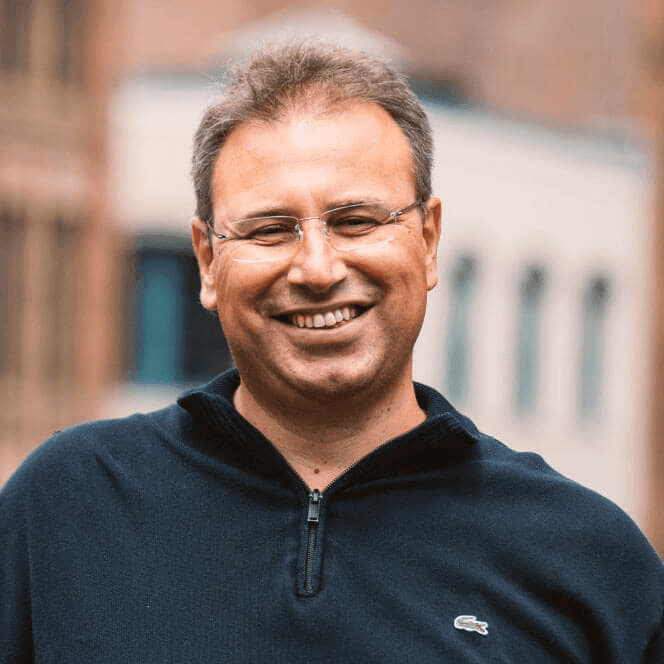
Co-Host
Aytekin Tank
Founder & CEO, Jotform

Co-Host
Demetri Panici
Founder, Rise Productive




About the Episode
In this episode of the AI Agents Podcast, host Demetri Panici sits down with a healthcare AI consultant and operator to explore how AI is transforming patient care, addiction recovery, and provider workflows. They discuss the growing burden on healthcare workers, why AI note-taking tools are becoming essential, and how workflow automation could help reduce burnout across the medical industry. The conversation also dives into addiction treatment, medication adherence, insurance reimbursement challenges, and the real-world barriers preventing healthcare AI from scaling faster. If you want to understand where AI is actually delivering value in healthcare today—and where the industry still has a long way to go—this episode is worth watching.
Whether it's a hospital or clinic, medical or mental health and addiction, I think AI agents act as workflow compressors, not intelligence amplifiers, because the most valuable thing an AI can do in a healthcare organization is collapse time.
Hi, my name is Demetri Panici and I'm a content creator, agency owner, and AI enthusiast. You're listening to the AI Agents podcast, brought to you by Jotform and featuring our CEO and founder, Aytekin Tank. This is the show where artificial intelligence meets innovation, productivity, and the tools shaping the future of work. Enjoy the show.
My grandmother on my mom's side takes medication and my mom has to constantly keep her on track with the right days and doses. It's difficult for anybody, no matter the age. I've been through rounds of different medications and sometimes stopped when symptoms were gone, which is every doctor's bane of existence.
All of these problems apply to many things. Our product was originally designed for addiction, so that's the population we're trying to help first. The cool thing is everybody is very passionate about that now. When we started in 2015, addiction was an ugly word with lots of shame involved, and abstinence was heavily emphasized.
The situation has changed a lot, both for better and worse. The problem has gotten worse, but as a society, we've finally accepted that we need to help, not shun. We have to get this product to the people who need it to help communities suffering and the pain it causes families. That is the most important thing.
Just to compare this to other market options, there are some great products out there. Hero is probably the most widely known; it's a medication dispenser that sits on the counter at home. It works great for someone like a grandmother if someone can put the pills in it. There are also services like MedMinder that fill prescriptions, provide dosing schedules, reminders, and deliver to the door.
Our product is different because it is provider-provided. All data goes back to the provider so they can monitor care and ensure the right treatment for the patient. It's not direct to consumer but a business-to-business product that requires a prescription and has other components. It's secure, biometrically locked, and from provider to patient, not from Amazon or direct to consumer websites. Medication security and stopping diversion are the biggest differences.
What makes it easy to use is a very simple app with less than five words per screen, very picture-friendly like McDonald's menus, suitable for all abilities and education levels, English or non-English speakers. You see the picture of the dispenser, press the button for what you want it to do, and it gives you reminders by text. Then you open the app, which tells you what to do. It doesn't require any skill other than opening text messages and an app.
Our immediate goal is to solve the pain of communities dealing with addiction. Beyond that, there are many other applications. At conferences, we hear use cases like hospice nurses worried about administering morphine correctly or parents teaching children with lifelong medication needs to be responsible. We want to help with these intense cases but must get through FDA processes one step at a time.
I joined Aibo full-time in June after consulting since 2015. Since then, the medical AI landscape has moved fast, though the political roller coaster is hard to track. AI in healthcare has mostly been in note-taking software, like Heidi in mental health, but without clinician context, notes aren't complete or accurate. We still have a way to go because AI shouldn't mistakenly apply past patient data to current patients or give inappropriate diagnoses.
AI note-taking is now common in software since GPT's release, improving accessibility. Time compression is where AI makes a huge impact for providers, reducing note-writing from 15-30 minutes to 5-10 minutes, allowing more patients to be seen and better compliance with payer and licensing guidelines. Many providers currently do notes on weekends, which is burdensome.
I've worked with SOAP note AI tools and was unaware of the burden note-taking places on medical fields. It's practically impossible to keep up with a good patient load. My main concern is quality of care dropping due to administrative overload, which is absurd. Reimbursement is also a problem because providers spend more time than they get paid for, and insurance rates keep dropping. The root problem is a lack of care providers due to overburden, high costs, and low pay.
I remember a nurse friend talking about the ridiculous amount of notes they must take. AI offers great opportunities to save time and improve care. However, there are concerns about AI and medical advice, such as hallucinations from large language models. Cedars-Sinai released a study showing some AI-generated notes had incorrect context, indicating more work is needed.
AI sometimes remembers too much, causing errors. This varies by software, and I don't know the specifics of the study beyond what the news reported. We need to learn from such studies to avoid repeating mistakes. It's important for provider communities to steward technology to help, not harm, patients.
AI has benefited medical care in ways many may not know. From my 18 years consulting healthcare organizations, I've seen AI evolve in hospitals, clinics, medical, mental health, and addiction. AI agents serve as workflow compressors, collapsing time, which helps reduce provider burnout and improve outcomes by allowing providers to help more patients without exhaustion. This balance is the greatest trophy AI can give healthcare.
That balance could turn the tide for people wanting to enter or stay in medical fields. Interns often hear about terrible hours and note burdens, which discourages them. If we can get more providers back and attract new ones, healthcare nationwide will improve. Currently, there's a huge shortage of nurses, doctors, and therapists that we can't meet.
I know many nurses personally, which is funny given the reported shortage, but that may be regional. The long-term solution may involve technology helping available people perform better, possibly reducing the need for more nurses. Since AI's market arrival, payers have been reluctant to pay for technology without human providers involved, which is still largely true today.
Recently, federal government started implementing remote monitoring codes for conditions like heart disease, but technology with little or no provider interaction isn't reimbursed. This creates a loop where great ideas exist but no one invests or buys them if providers can't get paid. AI could change how providers handle patients, like diagnosing rashes and escalating to providers who get paid, but payers must change for this to happen.
To keep up with new developments without getting overwhelmed, I rely on my ADD as a superpower. I get locked in and sometimes forget to eat, but my dedication to the project helps me stay focused. It's life-consuming and a passion project where I live and breathe it daily until completion. I was there from the beginning helping push it through and now live that passion with the founder, which makes a big difference.
My passion comes from personal connections. I've known many people who died from addiction and have worked in the addiction space since around 2008. Almost everyone has been touched by addiction or alcoholism directly or indirectly. As a mother, I wouldn't wish the death of a child on anyone; that pain is unbearable and motivates me to help solve this problem if I can.
Many addiction treatment center staff have a connection to recovery, either personally or through loved ones. We believe in second, third, and multiple chances because recovery is rarely one and done. On average, people relapse five to seven times before overcoming addiction, which is one of the most evil problems in the world.
There are many opportunities for AI to help beyond products like ours, including habit-breaking or addiction-breaking apps. Some apps in development use predictive models to notify support systems or interact daily with patients as sponsors. However, these apps cost money, and many struggling with addiction can't afford them, making choices between essentials like gas, treatment, or childcare.
The Health and Human Services Department recently released grants and funding to flow to communities, which could make an impact if accessible. Private and commercial payers still need to help fund more programs. The White House announced distribution of funds to rural healthcare, but states handle the money differently, and some may keep it in state coffers. Medicaid cuts create concerns, but hopefully, funding balances out.
On a more general AI note, I use Adobe products daily for AI components, which are favorites among our internal team. Our programmers are more old-school and write specific algorithms for our software, speaking a different language. My role is to communicate needs to them so they can create solutions. Without AI, we couldn't scale labor to perform tasks manually for hundreds of patients.
Regarding concerns about AI taking jobs, I hear three views: Armageddon where everyone loses jobs, some workforce adjustments with people leveraging AI for new businesses, and jobs becoming more knowledge-based rather than data entry. Many people's work is mostly clicking around computers, so AI can free them for real work.
When hiring, I meet people genuinely afraid of AI, especially younger interviewees. Change is always hard, and resistance is natural. Personally, I work smarter with AI, seeing it as the next evolution after secretaries, typing pools, word processors, and computers. AI helps me and my team think and perform better. Jobs won't disappear but will change, with some roles like receptionists becoming obsolete but replaced by more competent patient care coordinators trained to operate at higher levels with AI assistance.
I agree that jobs will shift to more intellectual work, with AI handling tasks like note-taking and project management. The skill set changes but becomes more about using experience and mind to improve situations. We call this AI with an integrated human loop. Automation isn't complete yet, but like self-serve checkouts, AI changes job nature with upsides and downsides. Integration depends on data transfers and AI agents, leading to different job descriptions rather than job elimination.
To end, check us out as we look for pilot partners for our beta launch. Healthcare providers interested in increasing proactive care and providing the best patient care should visit www.ipill.tech. Thanks for spending time with me today and chatting. Make sure to check the link below. Thanks for watching and we'll see you in the next one. Bye-bye.
Stay Ahead with the AI Agents Podcast
Get the latest insights on AI agents, their future, and developments in the AI form industry.